



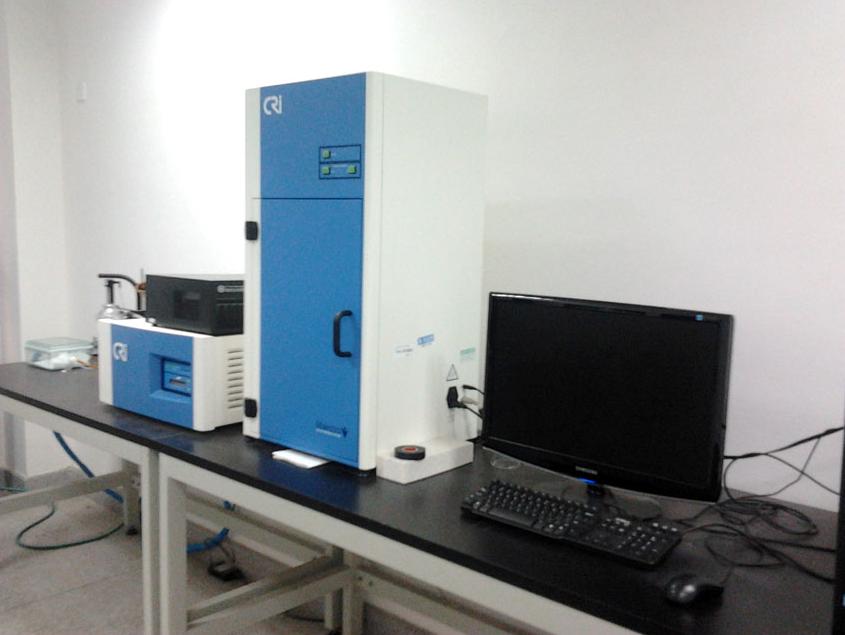
The Maestro EX In Vivo Imaging System incorporates CRi's FLEX technology, and aims to be the entry-level instrument of choice forin vivofluorescence imaging.The Maestro EX enables more precise detection and quantitation of molecular probes in live animals and complements the automated high-throughput Maestro 2 imaging system, by providing comparable imaging performance in a design intended for lower-throughput manual operation.
Instrument name | Small animal optical imaging system |
Model number | CRi Maestro EX |
Manufacturer | Photometrics |
Specifications | 1. 512 x 512 imaging array ,16 x 16-μm pixels. 2. Smallest, most powerful scientific EMCCD camera on the market. 3. Most advanced feature set available for low-light applications. 4. Lowest dark current available for an EMCCD camera. 5. Lowest read noise available for an EMCCD camera. 6. Ideal for sophisticated researcher and multi-user labs. 7. Superb electron multiplication (EM) gain and bias stability. 8. Most accurate EM calibration technique in the industry. 9. Available with exclusive eXcelon™ technology. 10. Backed by Photometrics’ worldwide support team. |
Applications and Uses | The Evolve 512 offers life science researchers the world’s first advanced feature set designed specifically for EMCCD cameras and for low-light-level bio-imaging applications. Each of the Evolve camera’s revolutionary features can easily be enabled or disabled by the camera user via software control. This sophisticated functionality enhances the quantitative nature of the camera while simultaneously allowing researchers to concentrate on acquiring image data relevant to their work. |
Accessories |
|
Contacts | Xiangfang Tan |
Contact number | 65884616 |
xftan@suda.edu.cn |
Editor: Xiaofang Tan