Presenter:Prof. Harm-AntonKlok
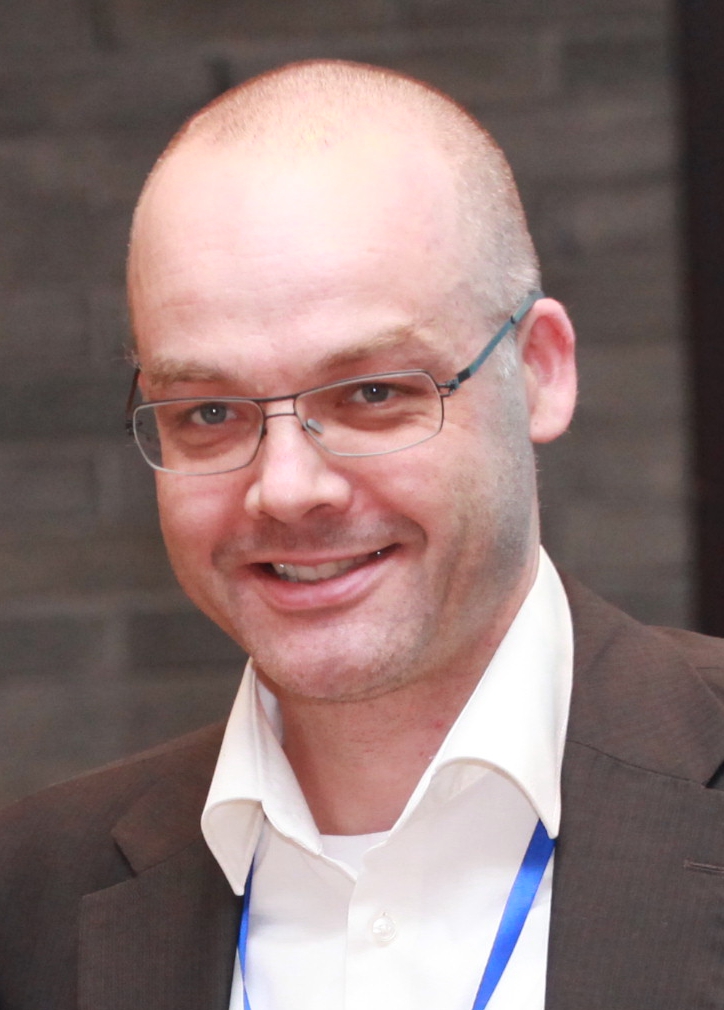
Institutes of Materials and Chemical Sciences and Engineering
Ecole Polytechnique Fédérale de Lausanne (EPFL)
Lausanne, Switzerland
Topic: Surface engineering using controlled radicalpolymerization
Time:15:30PM,Apr. 21st (Thursday)
Location:Conference Room B, BLDG 909-1F
Abstract
Thinpolymer coatings are of great importance to control the interactions of syntheticmaterials with other materials (lubrication, wear), the environment (corrosion)as well as biology (marine antifouling). Modern polymer science offersunprecedented opportunities to chemically engineer the properties of surfacesand interfaces. This presentation will discuss three aspects. The first part ofthe presentation will introduce modern controlled/”living” radicalpolymerization techniques and “polymer brushes” (chain-end tetheredmonomolecular assemblies of densely grafted polymer chains) and present thescope and possibilities of these approaches to chemically modify surfaces andinterfaces. The second part of the presentation will address the need foraccurate surface chemical characterization and the challenges related to theprecise determination of the localization and distribution of functional groupsin thin polymer films. The presentation will end with several brief showcasesthat illustrate the use of modern polymer science tools to develop ultrathinpolymer films that possess sensory properties, which can be used to controlfluid flow, to template the controlled growth of metallic or non-metallicinorganic films on complex, 3D structured substrates as well as to guide andcontrol cell adhesion.
Reference
1.R.Barbey, L. Lavanant, D. Paripovic, N. Schüwer, C. Sugnaux, S. Tugulu, H.-A.Klok, Polymer brushes via surface-initiated controlled radical polymerization:synthesis, characterization, properties and applications, Chem. Rev. 2009, 109,5437.
2.N. Schüwer, T. Geue, J. P. Hinestrosa, H.-A. Klok, Neutron reflectivity studyon the postpolymerization modification of poly(2-hydroxyethyl methacrylate)brushes, Macromolecules 2011, 44, 6868.
3.R. Barbey, V. Laporte, S. Alnabulsi, H.-A. Klok, Postpolymerizationmodification of poly(glycidyl methacrylate) brushes: An XPS depth-profilingstudy, Macromolecules 2013, 46, 6151.
4.N. Schüwer, H.-A. Klok, A potassium-selective quartz crystal microbalancesensor based on crown-ether functionalized polymer brushes, Adv. Mater. 2010, 22, 3251.
5.C. Sugnaux, L. Lavanant, H.-A. Klok, Aqueous fabrication of pH-gated,polymer-brush-modified alumina hybrid membranes, Langmuir 2013, 29, 7325.
6.S. Desseaux, H.-A. Klok, Temperature-controlled masking/unmasking ofcell-adhesive cues with poly(ethylene glycol) methacrylate based brushes, Biomacromolecules 2014, 15, 3859 � 3865.
7.S. Desseaux, H.-A. Klok, Fibroblast adhesion on ECM-derived peptide modifiedpoly(2-hydroxyethyl methacrylate) brushes: ligand co-presentation and3D-localization, Biomaterials 2015, 44, 24 � 35.
8.N. Fortin, H.-A. Klok, Glucose monitoring using a polymer brush modifiedpolypropylene hollow fiber-based hydraulic flow sensor, ACS Appl. Mater. Interfaces 2015, 7, 4631 � 4640.
9.C. Sugnaux, A. Dalmau Mallorquí, J. Herriman, H.-A. Klok, A. Fontcuberta iMorral, Polymer brush guided formation of conformal, plasmonicnanoparticle-based electrodes for microwire solar cells, Adv. Funct. Mater. 2015, 25,3958 � 3965.
Biography
Harm-AntonKlok is Full Professor at the Institutes of Materials and Chemical Sciences andEngineering at the Ecole Polytechnique Fédérale de Lausanne (EPFL) (Lausanne,Switzerland). His research interests include polymer nanomedicine as well aspolymer surface and interface science.
Hestudied chemical technology at the University of Twente (Enschede, TheNetherlands) from 1989 to 1993 and received his Ph.D. in 1997 from theUniversity of Ulm (Germany) after working with Martin Möller. Afterpostdoctoral research with David N. Reinhoudt (University of Twente) and SamuelI. Stupp (University of Illinois at Urbana�Champaign, USA), he joined the MaxPlanck Institute for Polymer Research (Mainz, Germany) in early 1999 as aproject leader in the group of Klaus Müllen. In November 2002, he was appointedto the faculty of EPFL. Since 2012 he is Director of the Institute of Materials(~ Department Head) and also directs the Molecular and Hybrid MaterialsCharacterization Center at EPFL.
Harm-AntonKlok is recipient of the Arthur K. Doolittle Award of the American ChemicalSociety (2007) and is Associate Editor of the American Chemical Society journal Biomacromolecules and serves or hasserved on the editorial advisory board of Eur.Polym. J., J. Polym. Sci. A: Polym.Chem., Macromolecules, ACS Macro Letters as well as Macromol. Rapid Commun., Macromol. Bioscience and Chimia. He has been a Visiting Professorat the University of Bordeaux (France) and the University ofMassachusetts/Amherst (USA), is a Chair Professor at the College of Chemistry,Chemical Engineering and Materials Science, Soochow University (Suzhou, China),guest professor at the Changchun Institute of Applied Chemistry, ChineseAcademy of Sciences (Changchun, China), at the School of Environmental andChemical Engineering, Shanghai University (Shanghai, China) and at the Schoolof Materials Science and Engineering, Nanyang Technological University,Singapore and was awarded a Chinese Academy of Sciences visiting professorshipfor senior international scientists (Institute of Chemistry, Chinese Academy ofSciences, Beijing).
联系人:殷黎晨 教授
(责任编辑:张伶 联系方式:4622696345@qq.com)


